The restriction on membership has now been removed.
All talks take place in Strutt’s Community Centre, Room 107 unless otherwise noted, and start at 7.30pm. The room is open from 7pm. A lift is available. Parking is available on site.
The Programme of talks for 2026.
Thursday 15th January
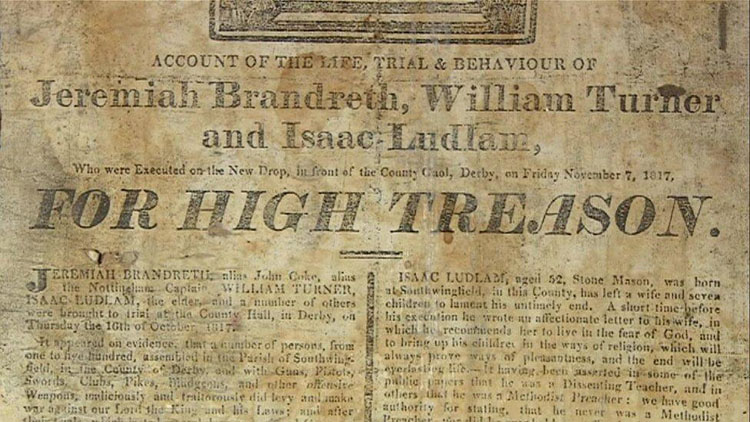
The Strutts and the Pentrich Revolution
Sylvia Mason
Did the Strutts unwittingly cause the Pentrich Revolution?
Did the Strutts support the rebels by declining jury service and pushing for pardons?
Joseph Douglas Strutt wrote to his cousin, Edward, about the executions “People are flocking into Derby … Good God, are these things to be suffered much longer in our free and happy land”.
Thursday 19th February – BHS MEMBERS ONLY
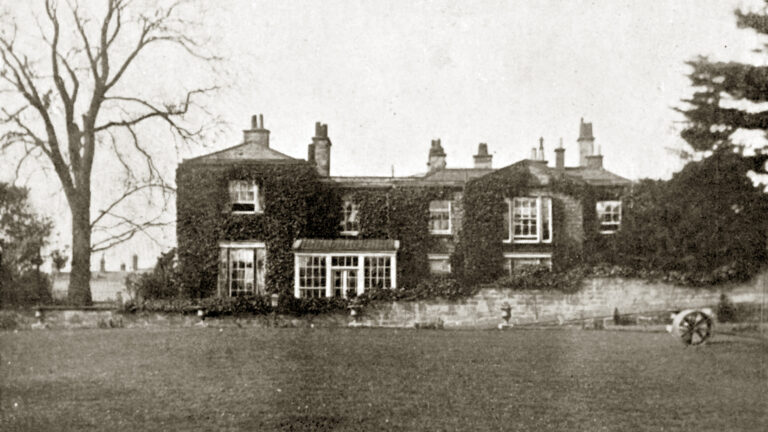
Belper 250 – The Lost Strutt Houses
Adrian Farmer
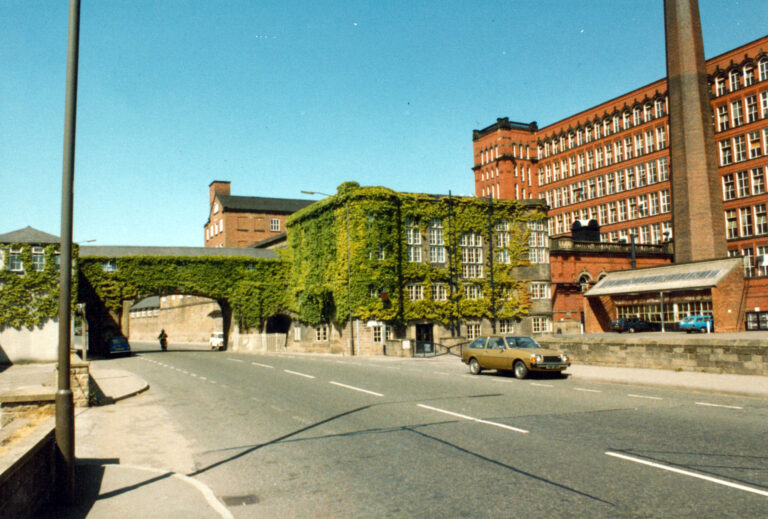
Sadly, some of the key homes of the Strutt family, who built and owned the Belper and Milford Cotton Mills, were lost in the 20th century, and others were repurposed, including properties in Scotland and Wales.
Adrian takes a look back at these properties, and what happened to them.
Thursday 19th March – BHS MEMBERS ONLY
Frank Beresford, Artist of Royalty, History, Landscapes and my Grannies!
Robert Reid
Robert is a member of the Society and has been studying the life and work of local artist, Frank Beresford (1881 – 1967), for some while.
Beresford was born in Derby, studied at Derby School of Art, exhibited at the Royal Academy and was recognised for his war paintings and his portrait of George Herbert Strutt which hangs in the Belper Town Council Offices at St John’s Chapel.
Thursday 16th April
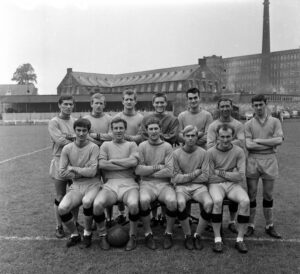
75 years of Belper Town FC
Mike Smith
Mike has been researching the history of the current Belper Town Football Club, The Nailers.
This is a brief look at the highs and lows of the Town’s premier football club since its reformation in 1951 – from changing in the Talbot and trotting over the bridge, to the floodlights and fancy scoreboards of the 21st Century!
Thursday 21st May
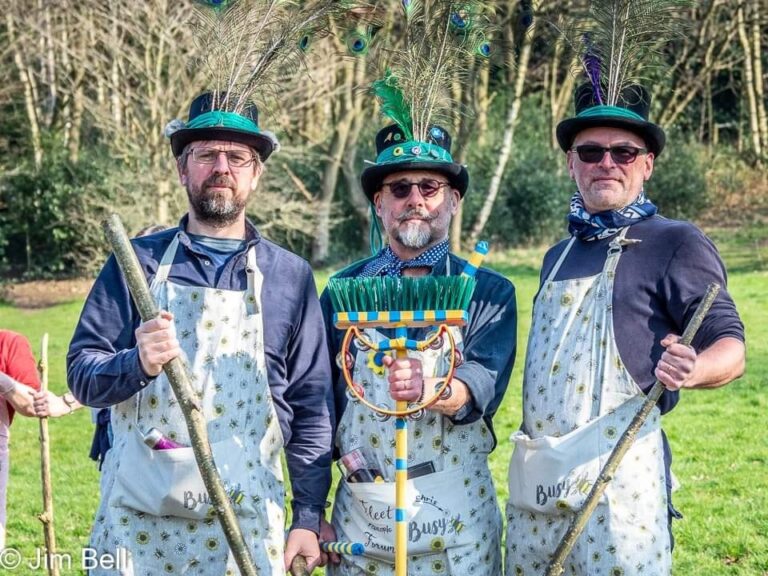
Finding the Historic in the Folkloric
Chris Lewis-Jones
Chris Lewis-Jones is an artist, folklorist and lecturer who worked for many years as an archaeological illustrator.
Whilst working in rescue archaeology he became fascinated by folkloric culture, seeing it as a link to the past that was more vital than the academic route.
His talk will explore his journey from history to folklore and back, with references to the function of the folkloric within contemporary culture/s.
Photo copyright Jim Bell
Thursday 18th June
The Buildings of Holbrook
Michael Lobb
MSDS Heritage recently completed an Historic England funded project on Holbrook’s Hidden Heritage.
Michael Lobb is a Buildings Archaeologist who has worked extensively across the Midlands and now works for MSDS Heritage in Holbrook, Derbyshire.
Michael has a particular interest in agricultural, domestic and industrial buildings from the late 18th and early 19th centuries.
Thursday 16th July
Strutt Around North Mill, Belper (walk)
BNMT
An approx 1 hour 15 minute, external site tour of the Belper Mills complex, with an exclusive trip into the North Mill Basement when conditions allow.
Members Only
Thursday 20th August
The Dark Side of Milford (walk)
Jane Whitaker
Meet 6:30pm at the Triangle, Chevin Road, Milford (opposite the Strutt Arms /Elephant & Peacock). Strong footwear needed, some steep up and downhill, and rough terrain.
This walk covers Milford’s west side (or the “dark side”, where the sun doesn’t shine over the Chevin in the winter months) looking at the development of the housing, community buildings and the railway.
Find out what it was like to have the Strutts as your landlord, why the community of Swainsley Court no longer exists, and where the people of Milford wanted their own railway station.
Mostly flat and on pavements.
Members only
Thursday 17th September
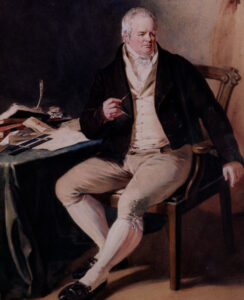
William Strutt, FRS: A tradesman of some eminence
Ian Jackson
As William Strutt left no journals or diary, we need to look at contemporary, third party, accounts of his work and legacies, to understand why he was so respected by his peers, including his appointment as a Fellow of the Royal Society.
This talk traces his life, both personal and work, with the progression of his more famous improvements, such as fire-proof mills and the stove heating system, and other less well-known activities.
Whilst William Strutt was recognised widely during his lifetime he is not on the list of great British Engineers today, and this research hopes to change that.
Thursday 15th October
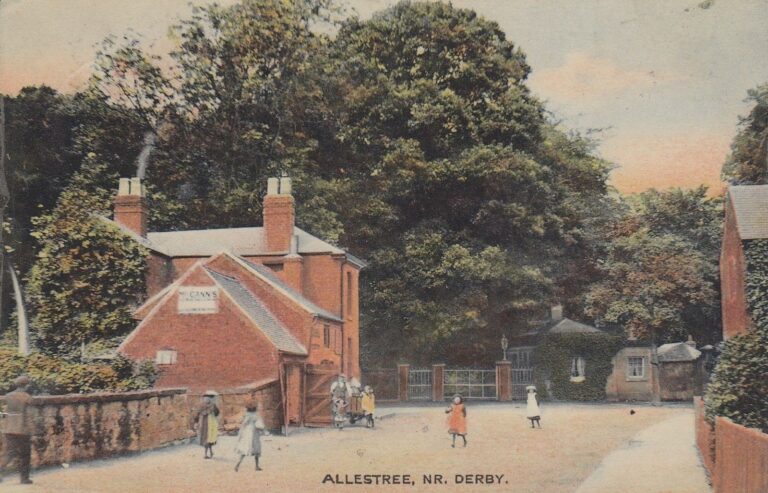
The importance of Allestree Hall and its landscape to the history of Derby
Andrew Picken
This site is within the top 8% of the most important historic venues in the United Kingdom protected by being within the buffer zone of the UNESCO Derwent Valley Mills World Heritage Site.
The talk will describe how efforts to save a globally unique and historically important golf course from destruction by having it created as the first listed golf course in the UK. Validation of the listed status for the golf course was agreed by Historic England with plans in place to announce the listing via international press.
Other research also reveals some astonishing direct links to globally important inventions such as the first aircraft carrier, armoured car and the Chieftain tank. Latest research suggests links to Roman Derby and a significant medieval kiln and pottery.
Thursday 19th November
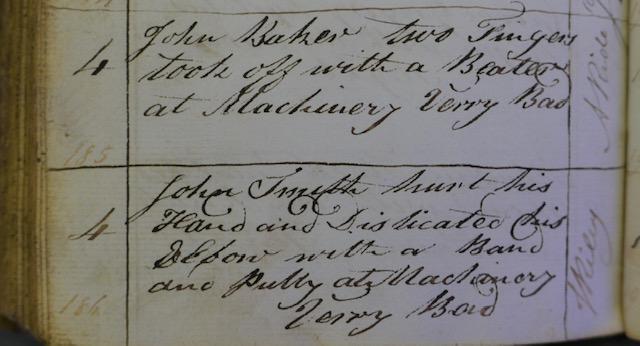
“Health And Safety Gone Mad?” Accidents at The Strutt Mills
Trevor Lightfoot
How dangerous was it to work in the Strutt mills in Belper and Milford?
What medical attention was afforded to injured workers?
Based on the Strutt’s own accident books and contemporary newspaper reports, the talk delves into the facts and figures of the risks of working at the mills and how legislation affected working practices. You may be surprised by some of the findings!
Thursday 17th December
Science, Technology, Arts and Culture in Urban Society: The Strutts and the Derby Philosophers, c1780-1850
Paul Elliott
Paul Elliott is a historian specialising in the history of parks, gardens and landscapes as well the cultural history of the late 18th and early 19th century.
His book on the Derby Philosophers has recently been published in paperback.